Arete Logo Jpeg Sep 19

H 143, Gurunanak Market, Mehrauli – Badarpur Rd, Lal Kuan, New Delhi, Delhi 110044

Copper Bonded Earthing Electrode & ROD

  • Home
  • Copper Bonded Earthing Electrode & ROD
Gel Earthing Electrode Manufacturers
sr 3 4
price img 1 4

Copper Bonded Earthing Electrode & Rod

Earthing is one of the most vital aspects of electrical safety. It provides a safe path for fault currents, prevents electric shocks, and protects equipment from damage caused by surges or lightning. While many types of electrodes are available, Copper Bonded Earthing Electrodes & Rods are considered among the most effective and economical grounding solutions worldwide.

Actual Quality Percentage Figure

Or an actual quality percentage figure (e.g., “99.9% reliability” for your earthing products

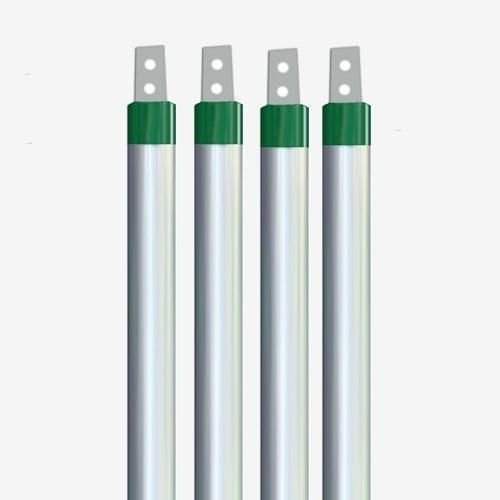
A Copper Bonded Earthing Electrode consists of a steel core that is molecularly bonded with a uniform layer of copper through advanced electroplating technology. This combination offers high tensile strength, excellent conductivity, and superior corrosion resistance. Compared to pure copper rods, copper bonded electrodes are more cost-effective, while providing comparable performance.

👉 To source premium-quality copper bonded earthing electrodes and rods, visit www.aretepowertech.co.in.

What is a Copper Bonded Earthing Electrode & Rod?

A Copper Bonded Rod is a steel rod coated with a thick layer of copper (usually 250–300 microns). Unlike copper-clad or copper-coated rods, which may peel off, copper bonded rods are manufactured using molecular bonding. This ensures that the copper layer does not separate from the steel core, even under harsh soil and weather conditions.

These rods are installed vertically into the ground to provide a low-resistance path for fault current, lightning energy, and static charges

Definition and Working Principle

Definition: A copper bonded earthing electrode is a grounding rod made from low-carbon steel, coated with high-purity electrolytic copper using molecular bonding.

Working Principle: When an electrical fault occurs, excess current flows into the electrode. The copper layer ensures excellent conductivity, while the steel core provides mechanical strength. The current is safely dissipated into the earth, protecting people and equipment.

Why Copper Bonded Rods are Preferred

Superior Conductivity: Copper provides excellent electrical conductivity.
Mechanical Strength: Steel core makes it strong and unbreakable during installation.
Corrosion Resistance: Thick copper layer protects against soil chemicals.
Cost-Effective: Cheaper than pure copper rods while offering long life.
Long Service Life: Typically lasts 30–40 years in normal soil conditions.

Comparison: Copper Bonded vs. Pure Copper vs. G.I.

Feature

Material

Conductivity

Mechanical Strength

Corrosion Resistance

Cost

Life Span

Copper Bonded Rod

Steel core + copper bonded layer

High

Very strong

Excellent

Medium

30–40 years

Pure Copper Rod

100% copper

Very high

Softer, may bend

Excellent

High

25–40 years

G.I. Rod

Galvanized iron

Medium

Strong

Moderate

Low

10–15 years

👉 Copper bonded rods provide the best balance of cost, performance, and durability, making them the preferred choice for most projects.

Key Features of Copper Bonded Earthing Rods

Uniform 250–300 micron copper bonding
High mechanical strength due to steel core
Excellent corrosion resistance
Easy to install and handle
Available in multiple sizes (14mm to 100mm, 1m–3m)
Compliant with UL 467, IS 3043, IEC, IEEE standards

Technical Specifications

Material Composition: Low-carbon steel core bonded with 99.9% pure copper
Copper Thickness: 250–300 microns (standard), can go up to 350 microns
Diameter: 14mm, 17mm, 25mm, 32mm, 50mm, 100mm
Length: 1m, 2m, 3m (custom lengths available)
Standards: IS 3043, UL 467, IEC 62561, IEEE 80


Applications of Copper Bonded Earthing Electrodes

Residential Buildings – For household safety and appliance protection
Commercial Buildings – Malls, offices, hospitals, schools
Industrial Plants – Heavy-duty machinery and production lines
Telecommunication Towers – To discharge lightning surges safely
Renewable Energy Projects – Solar and wind farm grounding
Data Centers – Reliable earthing for IT infrastructure
Power Stations – High load-bearing grounding systems

Advantages Over Traditional Earthing

Longer Life – 30–40 years service life
Cost-Effective – Affordable compared to pure copper
High Strength – Can withstand hammering/driving into rocky soil
Better Safety – Low resistance ensures quick dissipation of fault current
Corrosion-Free – Stable performance in all soil conditions

Installation Process of Copper Bonded Earthing Rods

Tools Required
Auger/drilling machine
Hammer or hydraulic driver
Backfill compounds (bentonite, charcoal, salt, conductive gel)
Earthing clamps and copper strips

Step-by-Step Guide

Site Selection: Choose a location with moisture-rich soil.
Drilling: Create a bore hole of required depth (up to 3m).
Rod Placement: Insert the copper bonded rod vertically.
Backfilling: Use a conductive compound to lower resistance.
Connection: Connect rod to earthing strip/wire with copper clamps.
Testing: Measure resistance values with an earth tester.

Best Practices

Use multiple rods for large projects, connected in parallel.
Apply moisture-retaining compound in dry areas.

Conclusion

Copper Bonded Earthing Electrodes & Rods offer the best combination of strength, durability, conductivity, and affordability. They outperform G.I. electrodes in lifespan and performance while being more economical than pure copper rods.