Ut tellus dolor, dapibus eget, elementum ifend cursus eleifend, elit. Aenea ifen dn tor wisi Aliquam er at volutpat. Dui ac tui end cursus eleifendrpis.
Phone No:
(+91 99109 04079)
H 143, Gurunanak Market, Mehrauli – Badarpur Rd, Lal Kuan, New Delhi, Delhi 110044
Email Address: aretepowertech@gmail.com


Earthing is an essential safety requirement in every electrical installation, ensuring protection against electric shocks, equipment failure, and fire hazards. While several types of earthing electrodes are used today, Copper Earthing Electrodes stand out as one of the most effective and reliable options.
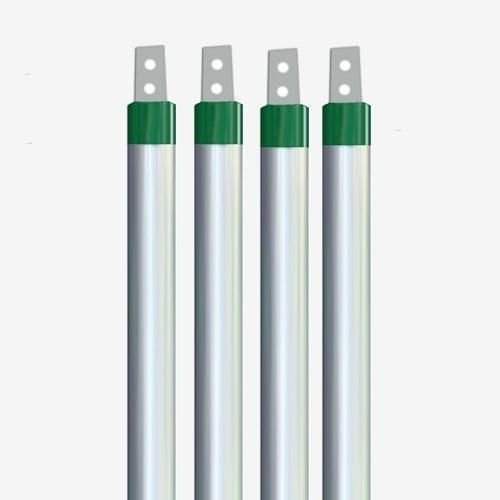
Copper, being an excellent conductor of electricity and highly resistant to corrosion, makes an ideal choice for earthing systems. A Copper Earthing Electrode is a rod, strip, or pipe made of pure copper or copper-bonded steel, installed deep in the soil to provide a low-resistance path for fault currents.

Or an actual quality percentage figure (e.g., “99.9% reliability” for your earthing products
These electrodes are widely used in critical infrastructure, high-rise buildings, power plants, data centers, telecom towers, and industries where safety and reliability cannot be compromised.
A copper earthing electrode is a specially designed conductor made of copper, placed vertically into the ground to dissipate fault currents safely into the earth. Its primary function is to protect human life, electrical equipment, and structures from the dangers of uncontrolled voltage surges and fault currents.
Copper electrodes are available in various forms, including:
Solid Copper Rods
Copper-Bonded Steel Rods
Copper Strips and Plates
In the event of a fault or lightning strike, excessive current flows through the earthing system.
The copper electrode provides a low-resistance path for the current.
The electrical energy dissipates safely into the earth’s conductive mass, neutralizing potential hazards.
Material
Conductivity
Corrosion Resistance
Cost
Life Span
Applications
Pure copper / copper-bonded steel
Very high (best conductor)
Excellent (copper naturally resists corrosion)
Expensive
25+ years
High-end, sensitive, critical installations
Galvanized iron (zinc coated)
Moderate
Good (depends on galvanization)
Affordable
15+ years
General residential, commercial, industrial
👉 Copper electrodes are preferred in critical systems where maximum conductivity and long life are required, while G.I. electrodes are better for cost-sensitive projects.
Excellent Conductivity – Copper offers one of the best electrical conductivities of all metals.
Corrosion Resistance – Naturally resistant to rust and soil chemicals, ensuring long life.
High Tensile Strength – Can withstand mechanical stress during installation.
Long Service Life – Typically lasts 25 years or more with proper installation.
Low Maintenance – Requires minimal upkeep compared to traditional plate earthing.
Wide Size Availability – Available in different diameters and lengths (1m to 3m).
Material: Pure copper or copper-bonded steel
Rod Diameter: 14mm – 100mm (commonly 17mm, 25mm, 32mm)
Rod Length: 1m, 2m, 3m
Copper Bonding Thickness: 250–300 microns (for copper-bonded rods)
Standards: IS 3043, IEC 62561, IEEE, UL 467
Copper electrodes are used in projects where maximum safety and durability are essential:
Residential Buildings – Safe electrical connections and appliance protection
Commercial Complexes – Ensuring safety in malls, offices, hospitals, schools
Industrial Plants – Reliable protection for machinery and heavy-duty systems
Telecommunication Towers – Preventing damage from lightning strikes and surges
Renewable Energy Projects – Essential for solar farms and wind power systems
Data Centers & IT Parks – Protecting sensitive IT infrastructure
Superior Conductivity – Provides lowest possible resistance.
Longevity – 25+ years of service life.
High Reliability – Suitable for sensitive and mission-critical equipment.
Low Maintenance – Requires minimal upkeep compared to plate earthing.
Compliance – Meets global safety standards (IS, IEC, IEEE).
Auger/drilling machine
Hammer or hydraulic driver
Backfill compound (bentonite, charcoal, salt, or conductive gel)
Earthing clamps and connectors
Site Preparation – Select soil with good moisture.
Drilling – Bore a hole of required depth (typically 2–3m).
Electrode Placement – Insert the copper rod vertically.
Backfilling – Fill with conductive compound to lower resistance.
Connection – Secure electrode with copper strip/wire using clamps.
Testing – Measure earth resistance to ensure compliance.
Use moisture-retaining compounds in dry soils.
Avoid loose or shallow installations.
Copper Earthing Electrodes are the gold standard in electrical grounding systems. With unmatched conductivity, corrosion resistance, and longevity, they ensure maximum safety and reliability in electrical installations. Whether it’s for residential, commercial, or industrial applications, copper electrodes provide peace of mind and long-term protection.