Ut tellus dolor, dapibus eget, elementum ifend cursus eleifend, elit. Aenea ifen dn tor wisi Aliquam er at volutpat. Dui ac tui end cursus eleifendrpis.
Phone No:
(+91 99109 04079)
H 143, Gurunanak Market, Mehrauli – Badarpur Rd, Lal Kuan, New Delhi, Delhi 110044
Email Address: aretepowertech@gmail.com


Rooftop Solar Power Plant – Clean Energy for Homes & Businesses.
.
With rising electricity costs and increasing environmental concerns, solar energy has emerged as one of the most sustainable and economical power solutions. Among the different solar applications, the Rooftop Solar Power Plant is gaining rapid popularity for both residential and commercial users.
Installed on rooftops of buildings, these systems convert sunlight into electricity using photovoltaic (PV) panels. They not only reduce dependence on grid power but also help save money and reduce carbon footprints.
👉 For premium-quality rooftop solar power plant solutions, visit www.aretepowertech.co.in
.
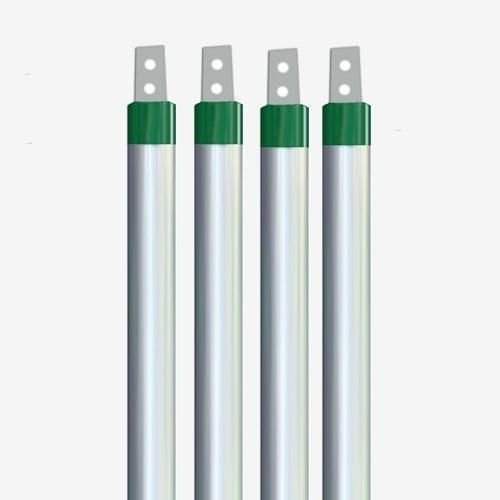
Or an actual quality percentage figure (e.g., “99.9% reliability” for your earthing products
A rooftop solar power plant is a power-generating system installed on the roof of a residential, commercial, or industrial building. It uses solar PV panels to capture sunlight and convert it into electricity.
The generated electricity can be:
Used directly (for self-consumption)
Stored in batteries (off-grid systems)
Exported to the grid (on-grid systems with net metering)
Solar Panels capture sunlight and generate DC (direct current) electricity.
Inverter converts DC to AC (alternating current), which can be used for household or industrial appliances.
Metering System monitors energy consumption and export.
Earthing & Protection Devices ensure safety and stability.
1. On-Grid (Grid-Tied) Solar Power Plant
Connected to the main electricity grid.
Excess energy exported to grid via net metering.
Most cost-effective, but does not work during power cuts without battery backup.
Connected to the main electricity grid.
Excess energy exported to grid via net metering.
Most cost-effective, but does not work during power cuts without battery backup.
Works independently without grid connection.
Uses batteries to store solar power for night use.
Ideal for remote locations with unreliable grid supply.
Combination of on-grid and off-grid systems.
Connected to grid and also has batteries for backup.
Provides maximum flexibility and reliability.
Solar PV Modules – Convert sunlight into electricity
Inverter (String or Micro) – Converts DC into usable AC power
Mounting Structure – Holds panels on rooftop at proper tilt angle
Battery Bank (optional) – Stores energy for backup
Solar Charge Controller – Regulates battery charging (in off-grid/hybrid systems)
Net Meter – Records import/export of electricity (for grid systems)
Earthing & Surge Protection – Ensures safety from lightning and surges
Reduced Electricity Bills: Save 50–90% on monthly energy costs
Environment Friendly: 1 kW solar = saves ~1.5 tons of CO₂ per year
Low Maintenance: Minimal upkeep required (only periodic cleaning)
Government Subsidies: Financial incentives available under MNRE policies
Long Life: Panels last 25+ years with >80% efficiency
Energy Independence: Reduce dependence on utility companies
Increased Property Value: Eco-friendly homes and buildings attract higher valuation
Capacity Range: 1 kW – 500 kW (residential, commercial, industrial)
Solar Panels: Polycrystalline / Monocrystalline (350–600 W per panel)
Efficiency: 15–22% (depending on module type)
Inverter Capacity: Equal to system capacity (1 kW to 500 kW)
Mounting Structure: Hot dip galvanized steel or aluminum
Life Expectancy: 25+ years for panels, 10–12 years for inverters
Standards: MNRE, IEC 61215, IEC 61730, IS 14286

Residential Homes & Apartments – Reduce household power bills
Commercial Buildings – Offices, malls, hospitals, educational institutions
Industrial Plants – Reduce high electricity demand charges
Government Buildings – Eco-friendly compliance and savings
Agricultural Sector – Solar pumping and cold storage applications
Telecom Towers – Reliable backup for continuous operations
Evaluate rooftop space, direction, and shade analysis.
Calculate load requirements and system capacity.
Fix mounting structures, panels, and electrical components.
Connect to grid via distribution company approval.
Verify system performance and safety compliance.
Rooftop Solar Power Plants are the future of sustainable and economical energy. With government subsidies, rising electricity prices, and growing awareness of environmental issues, installing solar on rooftops is a wise financial and ecological decision.